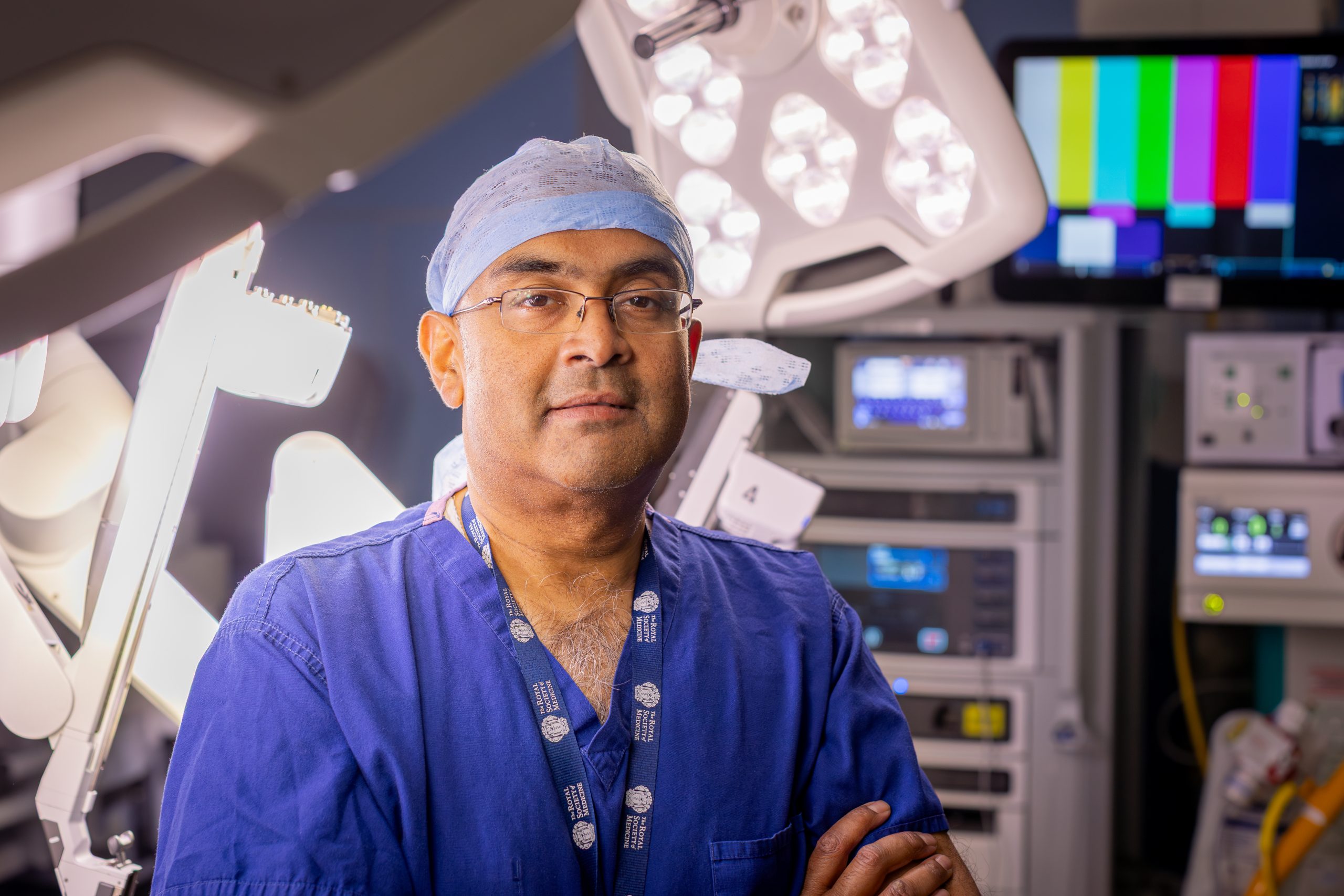
Mr Nizar is a leader in robotic surgery, using the most advanced technology available - the Da Vinci and Versius systems - to provide his patients with the highest standard of surgical care.
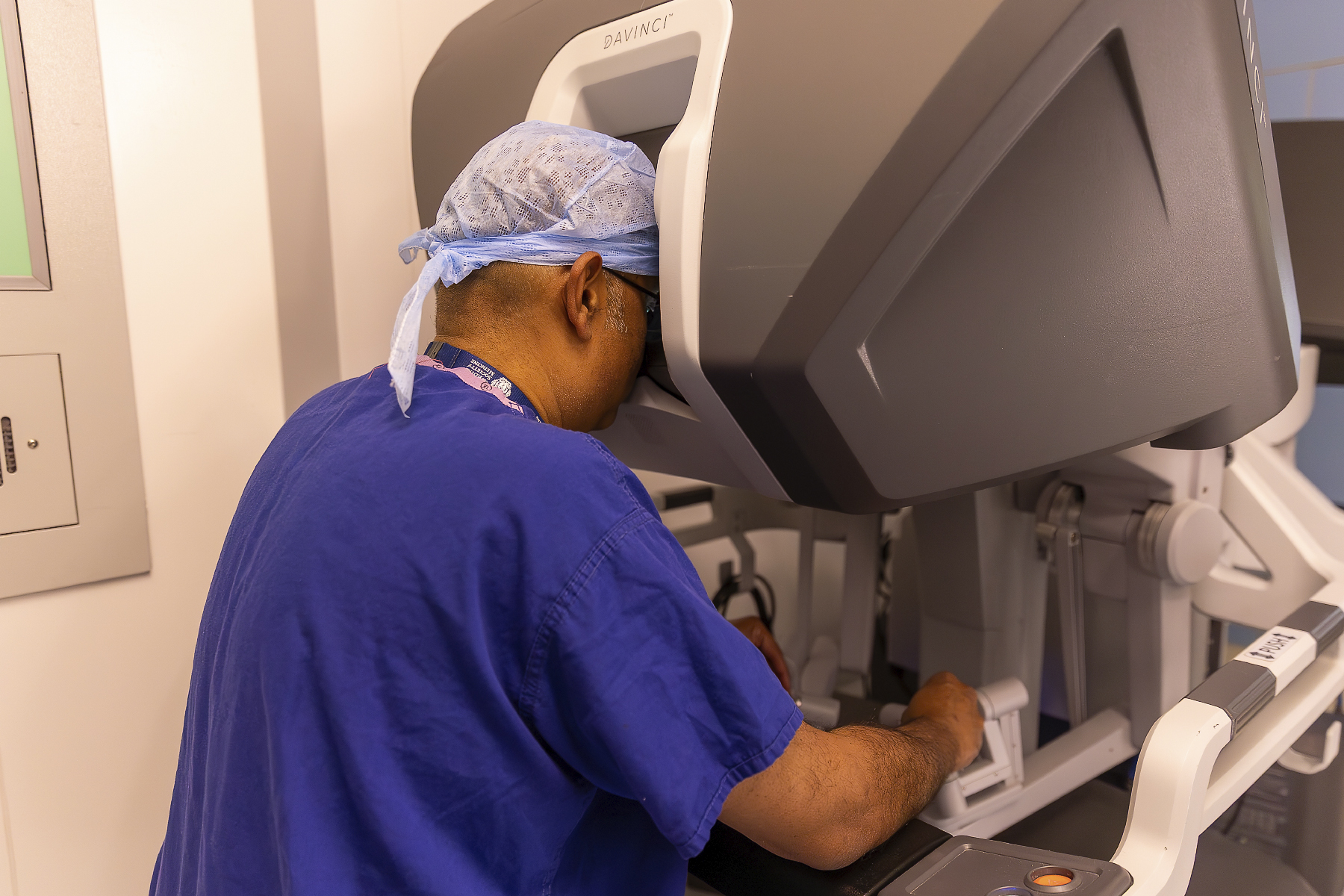
Mr Nizar is highly experienced in utilizing these cutting-edge platforms to deliver the highest standard of care:
The Da Vinci Surgical System: A well-established, pioneering platform known for its stable setup and high-definition 3D vision, allowing the surgeon to see anatomical structures with incredible clarity.
The Versius Robotic System: A modular, flexible system designed to mimic the human arm. Its versatile design allows for optimal instrument positioning tailored precisely to the patient's anatomy.
Robotic-assisted surgery represents the pinnacle of modern surgical technology. Mr Nizar utilizes state-of-the-art systems, such as the Da Vinci and Versius robots, to perform complex colorectal procedures with unparalleled precision.
It is important to note that the robot does not perform the surgery independently. Instead, Mr Nizar sits at a high-tech console, controlling the robotic arms with millimetre precision. The system provides a high-definition, 3D magnified view of the surgical site, far superior to the human eye. The robotic instruments possess “wristed” joints that can rotate further than a human hand, allowing Mr Nizar to operate in the tightest spaces of the pelvis with extreme accuracy. This technology is particularly beneficial for complex cancer surgeries, where sparing delicate nerves is essential for maintaining post-operative bladder and sexual function.
Robotic surgery is not a "one size fits all" solution, but rather a powerful tool that Mr Nizar selects when it offers a clear advantage for your specific condition. By combining his deep expertise in colorectal and general surgery with state-of-the-art integrated theatres at facilities like Spire St Anthony’s and Frimley Park Hospital, Mr Nizar ensures your treatment is as safe, precise, and minimally invasive as possible.
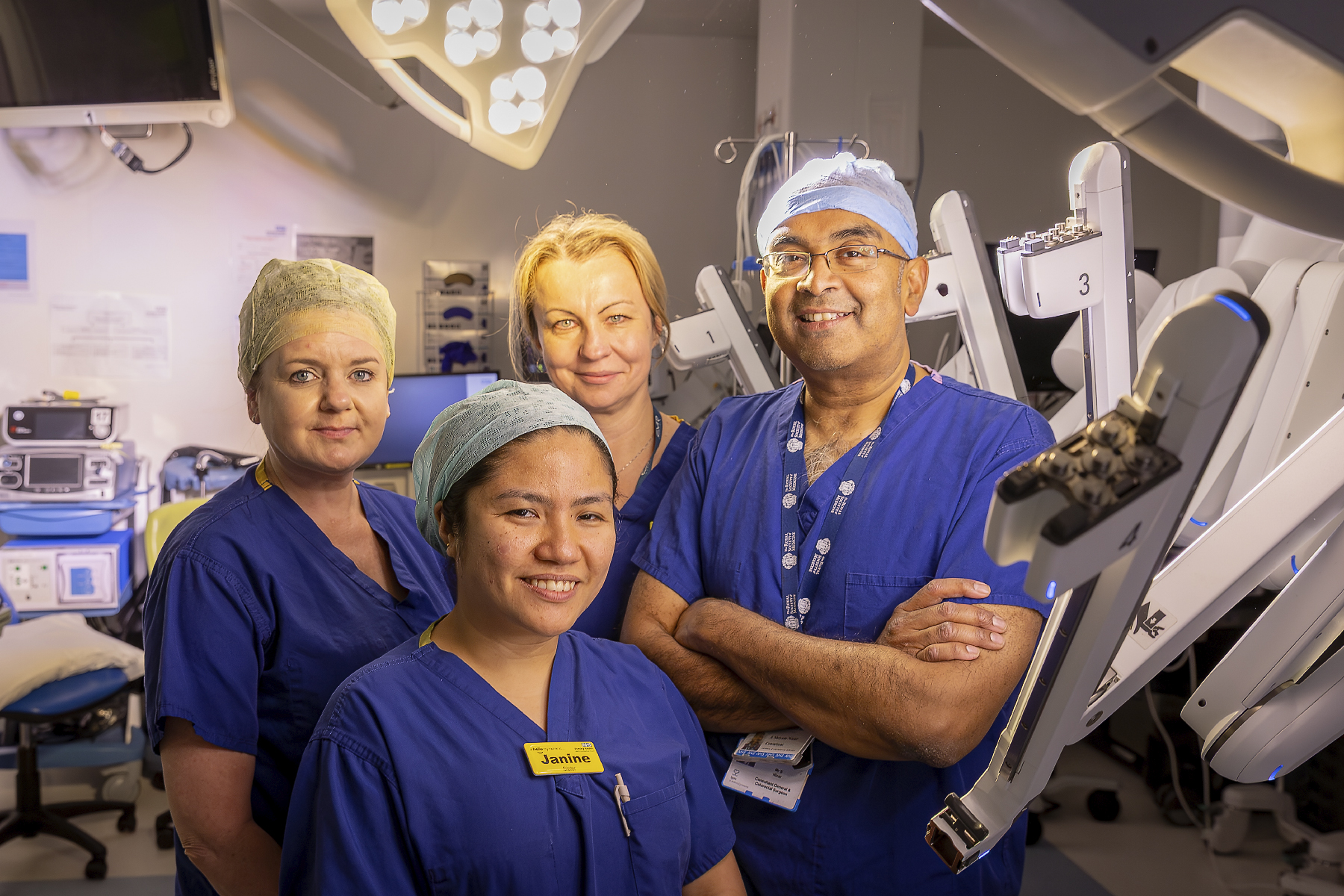
Robotic-assisted surgery is the evolution of minimally invasive (keyhole) surgery. Instead of holding surgical instruments directly, the surgeon operates from a high-tech console, controlling highly specialized robotic arms. Mr Nizar utilizes two of the world's most advanced surgical platforms: the da Vinci surgical system and the Versius robotic system.
These systems do not replace the surgeon; rather, they act as a highly precise extension of the surgeon’s own hands, allowing for unparalleled accuracy during complex operations.
Certain areas of the body, particularly deep within the pelvis and abdomen, are tightly packed and difficult to navigate using traditional open or standard laparoscopic instruments. Mr Nizar predominantly utilizes robotic surgery for colorectal cancer resections and complex abdominal wall hernias.
The technology provides several distinct advantages that overcome the limitations of traditional surgery:
Enhanced 3D Vision: Magnified, high-definition 3D imaging allows Mr Nizar to clearly see tissue planes, blood vessels, and delicate nerves that must be preserved.
Wristed Instruments: Traditional keyhole tools do not bend. Robotic instruments feature "EndoWrist" technology, which articulates with greater range of motion than a human wrist, allowing for precise suturing and dissection in tight spaces.
Tremor Filtration: The robotic system automatically filters out any microscopic hand tremors, ensuring incredibly smooth and steady movements.
For patients undergoing major bowel or hernia surgery, the combination of Mr Nizar’s expertise and robotic technology offers significant benefits compared to traditional open surgery:
Less Post-Operative Pain: Smaller incisions and highly precise tissue handling mean less trauma to the abdominal wall, significantly reducing the need for strong pain relief.
Reduced Risk of Infection & Complications: Smaller wounds naturally carry a lower risk of infection, and the precision of the robot minimizes blood loss during the procedure.
Faster Recovery and Shorter Hospital Stay: Patients are often up and moving much sooner, allowing for a quicker return to normal diet, bowel function, and daily activities.
Minimal Scarring: Instead of one large incision, the procedure is performed through a few tiny incisions, resulting in much smaller, faint scars.