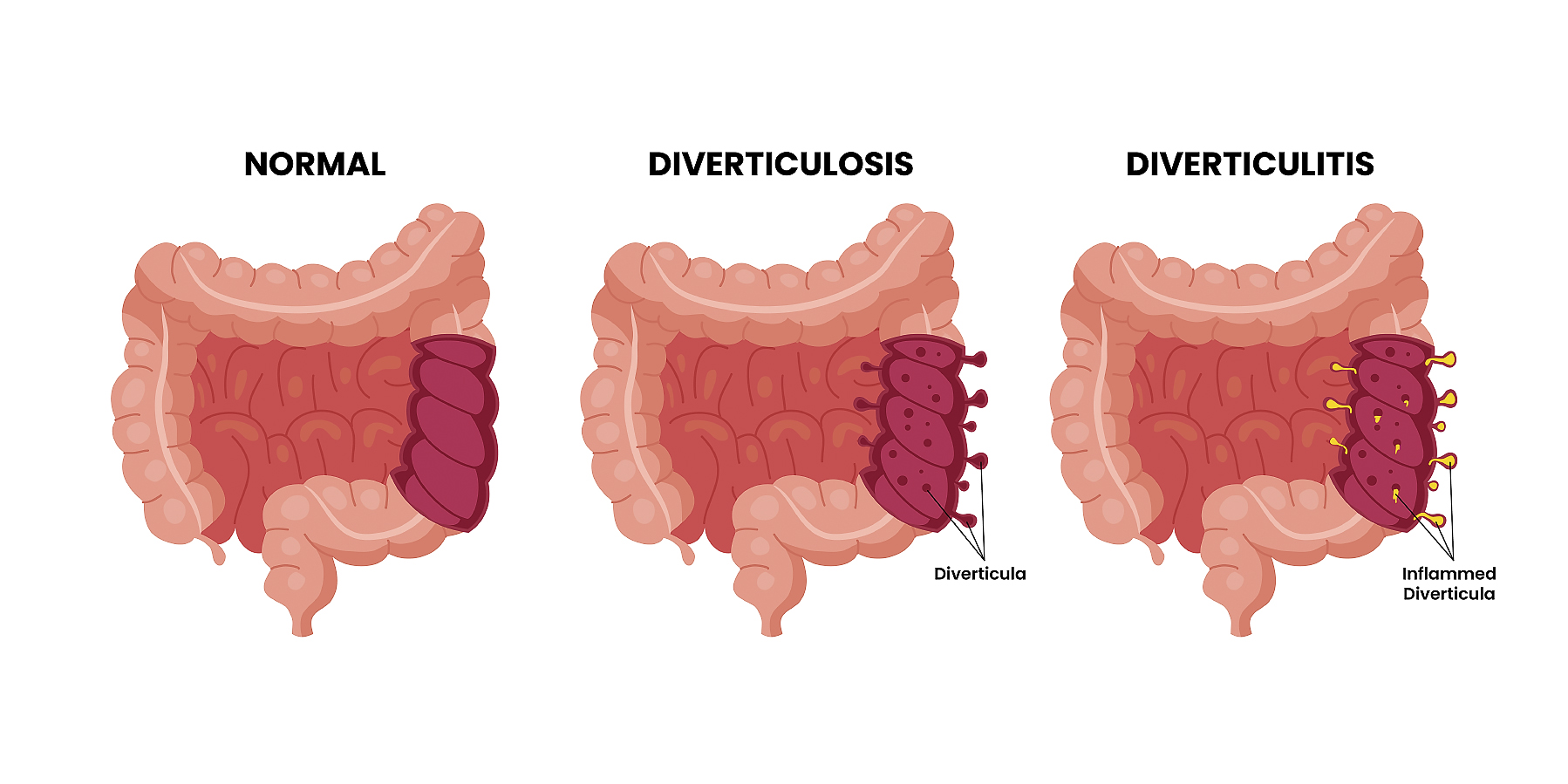
Diverticular disease occurs when small pouches (diverticula) form in the wall of the colon. While many people live with these without symptoms (diverticulosis), they can become inflamed or infected, leading to a painful condition known as diverticulitis.
Mr Nizar provides expert management for the entire spectrum of the disease. In mild cases, this may involve dietary and medical advice. However, for complex cases involving recurrent infections, abscesses, or bowel obstructions, surgical intervention may be necessary. Mr Nizar offers elective "planned" surgery to remove the affected segment of the colon, often performed laparoscopically to ensure a smoother recovery and prevent future emergency admissions.
Diverticular disease occurs when small, bulging pouches (diverticula) develop in the lining of your intestine, most commonly in the lower part of the large intestine (colon). While many people have these pouches without any symptoms (diverticulosis), they can sometimes become inflamed or infected. This acute condition is known as diverticulitis.
Mr Nizar provides expert, comprehensive assessment and tailored management strategies for all stages of diverticular disease, from dietary modifications to advanced surgical intervention.
The presence of pouches in the bowel wall. This is a common condition, often related to aging and a low-fibre diet, and frequently causes no symptoms at all.
Occurs when one or more of the pouches become inflamed or infected. This typically presents with severe, sudden abdominal pain (usually on the lower left side), fever, nausea, and a noticeable change in bowel habits.
Repeated flare-ups or severe infections can lead to complications such as abscesses, strictures (narrowing of the bowel), fistulas (abnormal tracts), or bowel perforation.
While mild flare-ups of diverticulitis can often be managed at home with antibiotics and a temporary liquid diet, recurrent or severe cases require specialist surgical oversight. Repeated inflammation can cause scarring and narrow the bowel, leading to obstructions. In rare, severe cases, a pouch can rupture, causing a life-threatening infection in the abdomen.
Seeking expert assessment ensures that your symptoms are investigated thoroughly—often via endoscopy or colonoscopy—to exclude other lower gastrointestinal conditions and to map out a safe, preventative long-term plan.
Mr Nizar prioritises a stepped, minimally invasive approach to treating diverticulitis, matching the intervention to the severity of your condition.
For initial or mild episodes, treatment focuses on bowel rest, targeted antibiotics, and a structured transition back to a high-fibre diet once the inflammation subsides.
If surgery is required due to recurrent attacks or complications, Mr Nizar specialises in Laparoscopic (Keyhole) and Robotic Colorectal Surgery to remove the diseased segment of the bowel (resection).
Robotic and Keyhole Precision: Using state-of-the-art robotic systems and keyhole techniques, the affected portion of the colon is precisely removed, and the healthy sections are rejoined.
Faster Recovery: This advanced, minimally invasive approach results in significantly less post-operative pain, a lower risk of infection, shorter hospital stays, and a much faster return to your normal daily activities.
Your recovery plan is managed under Mr Nizar’s dedicated care using Enhanced Recovery pathways. Following keyhole or robotic surgery, most patients are able to mobilize quickly and resume light activities within a few weeks. A dedicated dietary plan will be provided to help your bowel heal smoothly, with full recovery and a return to regular exercise typically expected within 4–6 weeks.
There is no "one size fits all" approach to managing diverticular disease. Mr Nizar offers comprehensive care that spans from diagnostic endoscopy and colonoscopy to advanced robotic bowel resections. Your treatment plan will be uniquely tailored to your specific anatomy, the frequency of your symptoms, and your overall lifestyle, with the primary focus on restoring your quality of life and preventing future complications.