Surgery is evolving, and Mr Nizar is at the forefront of this digital revolution. Using the Da Vinci and Versius robotic systems, he performs complex colorectal procedures with a level of precision that exceeds traditional methods.
Robotic-assisted surgery represents the evolution of minimally invasive (keyhole) surgery, acting as a highly precise extension of the surgeon’s own hands. Rather than replacing the surgeon, state-of-the-art platforms like the da Vinci and Versius systems allow Mr. Nizar to control specialized robotic arms with millimeter precision from a high-tech console.
This technology is not a "one size fits all" solution, but a powerful tool selected specifically when it offers a clear advantage for complex colorectal procedures and abdominal wall hernias.
The primary reason Mr. Nizar utilizes this technology is to overcome the physical limitations of traditional open or laparoscopic surgery, especially in tight, hard-to-navigate areas like the deep pelvis and abdomen. The robotic platforms provide enhanced 3D high-definition vision, giving the surgeon a magnified view of tissue planes, blood vessels, and delicate nerves far superior to the human eye.
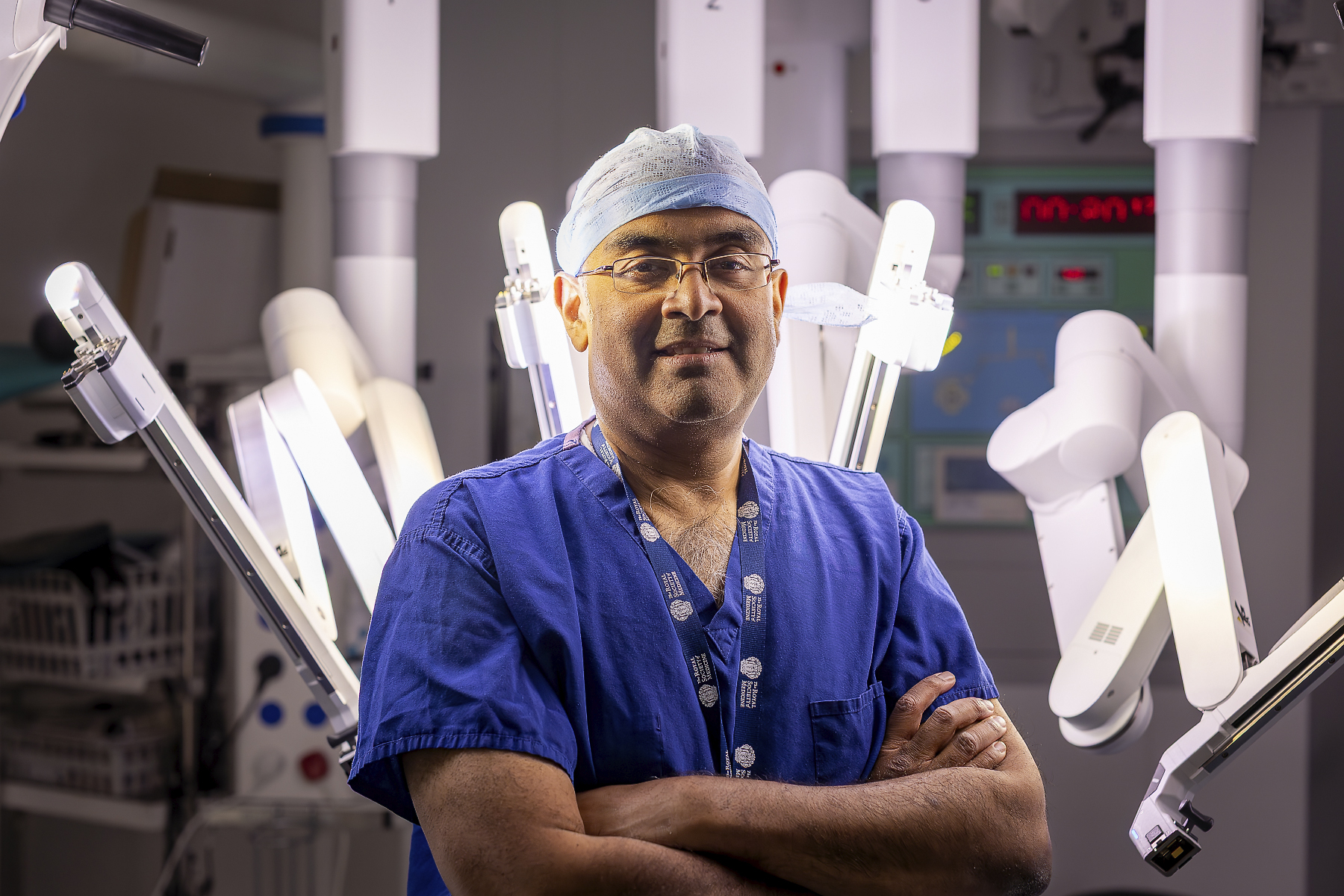
Additionally, the instruments feature wristed joints that rotate with a greater range of motion than a human hand, combined with tremor filtration technology that ensures incredibly smooth, steady movements for precise suturing and dissection.
Ultimately, Mr. Nizar combines his deep expertise with these integrated robotic systems to deliver a higher standard of care that directly benefits the patient. By utilizing tiny incisions and achieving unparalleled surgical accuracy, this approach results in less post-operative pain, a reduced risk of infection, and minimal scarring. For patients undergoing major bowel or hernia surgery, this means a safer procedure with less blood loss, a shorter hospital stay, and a much faster recovery to normal daily activities.
Mr Nizar is proud to continue the legacy of surgical excellence at Frimley.