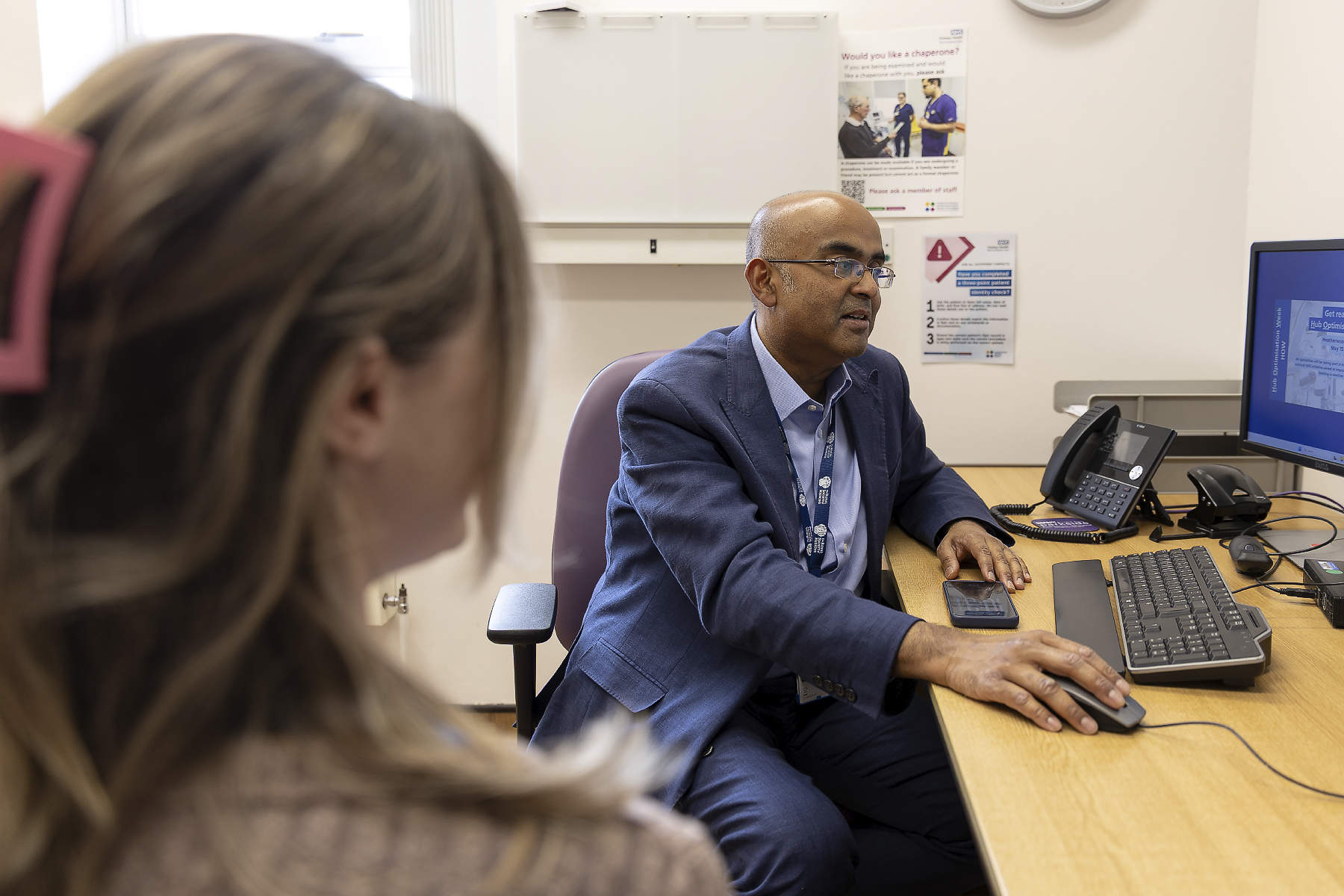
Bowel cancer, also known as colorectal cancer, is one of the most frequently diagnosed cancers in the UK. Bowel cancer is a serious but highly treatable condition, especially when caught early.
Mr Nizar specializes in “Minimal Access” surgery to ensure the best possible outcomes with the least disruption to your life.
While the diagnosis can be daunting, it is important to understand that when detected in its early stages, it is highly treatable and often curable. Mr Shiyam Nizar provides a comprehensive service that bridges the gap between initial symptomatic investigation and advanced surgical intervention.
Bowel cancer occurs when abnormal cells grow in the lining of the large intestine. Many cases begin as small growths called polyps, which can be detected and removed during a colonoscopy before they become cancerous.
Mr Nizar utilizes Robotic and Laparoscopic (Keyhole) surgery. Using tiny incisions and high-definition cameras, he removes the tumor with extreme precision.
Most patients are part of our Enhanced Recovery Program (ERAS), which focuses on getting you eating, drinking, and walking within 24 hours of surgery. You will typically stay in the hospital for 3–7 days, depending on the complexity of the procedure.
The primary treatment for bowel cancer is the surgical removal of the affected section of the bowel. This prevents the cancer from spreading to other parts of the body.
Symptoms and Investigation
Early detection saves lives. Mr Nizar investigates a wide range of red-flag symptoms, including persistent changes in bowel habits (such as loose stools or increased frequency), rectal bleeding, unexplained weight loss, and chronic abdominal pain. Utilizing high-definition endoscopy and rapid-access diagnostic pathways, we aim to provide clarity and a definitive diagnosis as quickly as possible.
The Surgical Approach
As a specialist in “Minimal Access” surgery, Mr Nizar utilizes both robotic and laparoscopic platforms to treat bowel tumours. This precision-focused approach allows for the oncological removal of the cancer and associated lymph nodes while meticulously preserving the surrounding healthy tissue and nerve structures. For patients, this means not only a higher standard of cancer care but also a significantly faster physical recovery and reduced post-operative discomfort.